Category: Magazine

رئيس أرض الصومال يكشف عن الاحتياطي العسكري في أول خطاب له في البرلمان

رئيس أرض الصومال يكشف عن الاحتياطي العسكري في أول خطاب له في البرلمان

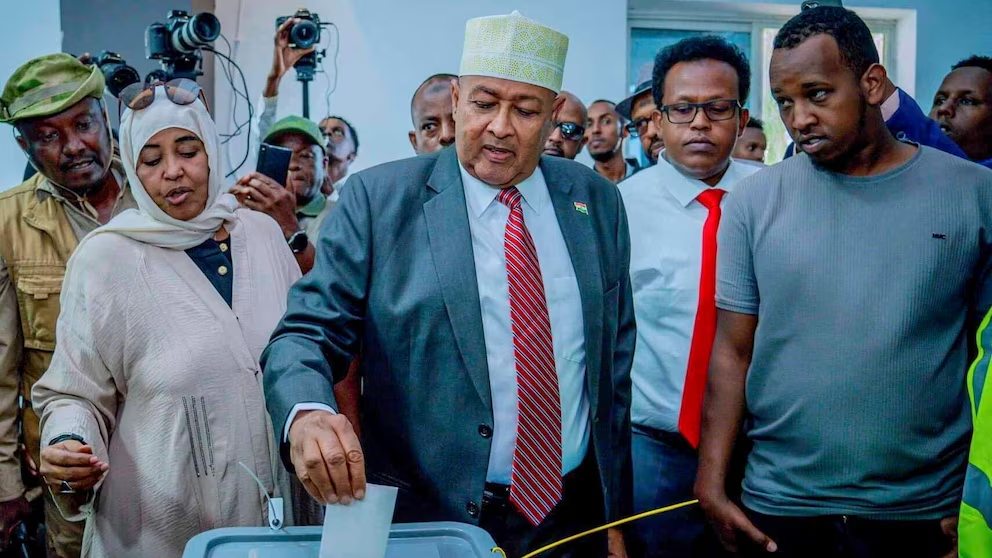
ألقى الرئيس عبد الرحمن محمد عبد الله “سيرو” خطابه الأول أمام جلسة مشتركة للبرلمان اليوم، مقدمًا بذلك أدقّ مخططاته حتى الآن لأجندة أرض الصومال في مجالات الأمن القومي والسياسة الاقتصادية والشؤون الخارجية. وفي خطابه الذي استمر قرابة ساعتين، أعلن الرئيس تشكيل قوات الاحتياط الوطنية لأرض الصومال، واستعرض إنجازات إدارته خلال أول 100 يوم من توليها السلطة.

رئيس أرض الصومال مع رئيس مجلس الشيوخ ورئيس المحكمة العليا ومسؤولين حكوميين آخرين

حضر الجلسة المشتركة أعضاء من مجلسي النواب والشيوخ، وقضاة من المحكمة العليا، وقادة أحزاب سياسية، ووزراء، وقيادات عسكرية، وقد خلت من الأجواء الاحتفالية التي ميزت الإدارات السابقة. ووصف الحاضرون الأجواء بأنها عملية، تعكس أسلوب الحكم الناشئ للرئيس عبد الرحمن سيرو: تركيز على السياسة وتخفيف من الاستعراض

قوات الاحتياط الوطنية

برز تأسيس قوات الاحتياط الوطنية في أرض الصومال كأبرز إعلان في ذلك اليوم، وهو تحول كبير في العقيدة العسكرية للجمهورية. إلا أن الرئيس لم يقدم أي تفاصيل عملياتية، تاركًا أسئلةً مفتوحة حول حجم القوة، ونموذج تجنيدها، وإطارها القانوني.

تُقدم النماذج العالمية لقوات الاحتياط مناهج متباينة: فدول مثل فنلندا وإسرائيل وسنغافورة تُبقي على خدمة الاحتياط الإلزامية بعد تدريب عسكري إلزامي، بينما تُطبّق دول أخرى، مثل الولايات المتحدة، أنظمةً قائمة على التطوع، حيث يُوازن المواطنون بين الوظائف المدنية والخدمة العسكرية بدوام جزئي. ولا يزال المسار الذي تنوي أرض الصومال اتباعه غير واضح، مع أن خبراء الأمن يُقرّون بأن لكل خيار تداعيات مختلفة تمامًا من حيث التكلفة والجاهزية والدعم الشعبي

تُمثل هذه القوة الجديدة أحد مكونات حزمة إصلاحات أمنية أوسع نطاقًا طُبقت منذ تولي الرئيس عبد الرحمن سيرو منصبه. وتشمل العناصر الأخرى تأميم الميليشيات العشائرية، والتسجيل البيومتري الشامل لإلغاء “الجنود الوهميين” من قوائم الرواتب، وتعزيز قدرات خفر السواحل – التي ادعى الرئيس أنها “تضاعفت ثلاث مرات” دون تحديد ما إذا كان هذا يشير إلى السفن أو القوى العاملة أو مخصصات التمويل

السلام في إيريجافو ودور نائب الرئيس

احتفل الرئيس بما وصفه بأنه أحد أبرز إنجازات إدارته: التوسط لإنهاء صراع عشائري استمر تسع سنوات في إيريغافو، وأسفر عن سفك دماء كبير وعدم استقرار إقليمي. وتضمنت اتفاقية السلام المعقدة نزع سلاح ميليشيات العشائر ودمجها رسميًا في القوات الوطنية.

في لحظةٍ فارقةٍ من التقدير العلني، أشاد الرئيس بالنجاح الذي حققه وفدٌ رفيع المستوى بقيادة نائب الرئيس محمد علي عبدي، ضمّ قادةً عسكريين ووزراءً وبرلمانيين وزعماءً محليين. وأشاد بالجهود الدبلوماسية لنائب الرئيس، طالبًا من المجلس تقديره بالتصفيق، وهو ما يُعدّ مثالًا نادرًا على روح الزمالة التنفيذية في المشهد السياسي التنافسي في أرض الصومال


حالة الأمة وإصلاحات الأمن

استغل الرئيس عبد الرحمن سيرو أجزاءً كبيرة من خطابه لوصف أرض الصومال بأنها خرجت من فترة اتسمت بالركود الاقتصادي والتدهور الأمني ​​والشلل الديمقراطي الناجم عن تأخير الانتخابات والتشرذم السياسي. وأكد أن التدخلات المبكرة لإدارته قد ساهمت في استقرار الجمهورية وأرست أسس إصلاح مؤسسي شامل.

من بين الإنجازات الأمنية التي سُلِّط الضوء عليها تطبيق نظام التسجيل البيومتري في جميع أنحاء القوات المسلحة للحد من الاحتيال في كشوف المرتبات، وهو تحدٍّ قائم منذ زمن طويل، وقد أدى إلى تحويل موارد الدفاع عن الاحتياجات التشغيلية. كما أشار الرئيس إلى تطبيق نظام دفع الرواتب مباشرةً من الخزانة لأفراد الخدمة، وتوسيع نطاق برامج التدريب لأكثر من 700 ضابط – تلقى بعضهم تدريبًا متخصصًا في الخارج – والتحديثات التكنولوجية في كلٍّ من خدمات الهجرة وبروتوكولات أمن المطارات على مستوى البلاد

استراتيجية التنمية الاقتصادية

وضع الرئيس استراتيجية اقتصادية ثلاثية الأبعاد تُركز على تعزيز الإنتاج المحلي، وتنويع مصادر الدخل، والاستثمار في البنية التحتية الحيوية. وأعلن عمليًا أن سعر الكهرباء في بربرة سينخفض ​​إلى 0.20 دولار للكيلوواط/ساعة بحلول يوليو 2025، مما يجعلها مصدر الطاقة الأقل تكلفة في البلاد، وسلط الضوء على سبعة مشاريع لبناء الطرق تهدف إلى ربط المناطق الزراعية والحيوانية بالمراكز الحضرية ومرافق الموانئ.

أفاد الرئيس بأن ميناء لوغايا قد استكمل مرحلة التقييم، وهو على أهبة الاستعداد للتوسع التجاري، مما قد يُنوّع قدرات أرض الصومال التجارية البحرية إلى ما يتجاوز بربرة. وأشرفت إدارته على إنجاز 32 بئرًا وخزانًا وشبكة لتجميع المياه لمعالجة النقص المزمن في المياه في المناطق الريفية ودعم التنمية الزراعية

لعب الاستثمار الأجنبي دورًا محوريًا في النهج الاقتصادي للإدارة. وسلط الرئيس الضوء على التزام مؤسسة فارو بتقديم 20 مليون دولار أمريكي، و22 مليون دولار أمريكي من ألمانيا، لدعم تحديث القطاع الزراعي. إضافةً إلى ذلك، خصص البنك الدولي 30 مليون دولار أمريكي لمشاريع الطاقة الشمسية في بربرة وبوراما، مما قد يُحدث نقلة نوعية في مشهد الطاقة في هاتين المدينتين الاستراتيجيتين

البرامج البيئية والاجتماعية

برزت الاستدامة البيئية في الخطاب، حيث تعهد الرئيس بزراعة ثلاثة ملايين شجرة خلال فترة ولايته، أي ما يقارب 600 ألف شجرة سنويًا. وأشار إلى أنه تم بالفعل غرس 300 ألف شتلة خلال اليوم الوطني لزراعة الأشجار، الذي يُحتفل به في 15 أبريل، مما يُشير إلى اتباع نهج مؤسسي للحفاظ على البيئة في منطقة معرضة بشكل متزايد لآثار تغير المناخ

فيما يتعلق بالتنمية الاجتماعية، أشار الرئيس إلى إعادة تأهيل 77 مركزًا صحيًا مع التركيز بشكل خاص على توسيع نطاق الرعاية الصحية للأمهات في المناطق المحرومة. وتهدف مبادرات إصلاح التعليم الجارية حاليًا إلى تعزيز بناء الهوية الوطنية، والتنمية الأخلاقية، والوعي البيئي، والإدماج الاجتماعي. وتشمل البرامج الإضافية برامج التعليم الإصلاحي المصممة للحد من العودة إلى الإجرام، وتقديم منح دراسية لأبناء أفراد الأمن الذين سقطوا في المعارك، وتحديث أنظمة الخدمة المدنية، بما في ذلك إصلاح أنظمة التقاعد

الشؤون الخارجية: الإمارات العربية المتحدة والولايات المتحدة والعلاقات الإقليمية

أولى الرئيس اهتمامًا بالغًا للمكانة الدبلوماسية المتطورة لأرض الصومال، مسلطًا الضوء على تعزيز العلاقات مع دولة الإمارات العربية المتحدة كركيزة أساسية لسياسته الخارجية. في يناير 2025، قام بزيارة رسمية إلى الإمارات، حيث أجرى محادثات مغلقة مع نائب الرئيس الشيخ محمد بن راشد آل مكتوم. وعاد إلى دبي في فبراير للمشاركة في القمة العالمية للحكومات، التي استضافت وفودًا من أكثر من 140 دولة.

وقال الرئيس إن هذه المشاركات رفيعة المستوى قد عززت مكانة أرض الصومال الدولية مع ضمان الالتزامات بمساعدات التنمية والاستثمار في البنية التحتية الصحية والمؤسسات التعليمية وموارد المياه وشبكات النقل

سلط الرئيس الضوء بشكل خاص على تعزيز العلاقات مع الولايات المتحدة، مشيرًا إلى الجهود المبذولة لتشجيع الاهتمام الأمريكي بأرض الصومال. كما أشار إلى المساعدات الأمنية ومبادرات التعاون المتنوعة التي قدمتها المملكة المتحدة، مما يُظهر توسع شراكات أرض الصومال الدولية لتتجاوز حدودها الإقليمية

غابت عن تصريحات الرئيس أي إشارة إلى مذكرة التفاهم الموقعة مع إثيوبيا في الأول من يناير/كانون الثاني 2024، والتي كانت تمنح إثيوبيا حق الوصول إلى ميناء بربرة وتنص على اعتراف دبلوماسي رسمي. ومنذ ذلك الحين، اتجهت إثيوبيا نحو التعاون مع الصومال من خلال محادثات بوساطة تركية، مع إعطاء الأولوية لدورها كدولة مساهمة بقوات في بعثات حفظ السلام الصومالية للحفاظ على نفوذها الإقليمي في مواجهة الطموحات المصرية المتزايدة. وتُوِّج هذا التغيير الدبلوماسي بإعلان أنقرة الصادر في ديسمبر/كانون الأول 2024 – وهو اتفاق يؤكد على احترام السيادة والسلامة الإقليمية – مما يحرم إثيوبيا فعليًا من الوصول المنشود إلى البحر الأحمر عبر أرض الصومال الذي وعدت به مذكرة التفاهم الأصلية

رئيس أرض الصومال السابق بيهي ورئيس الوزراء الإثيوبي أبي أحمد في وقت مذكرة تفاهم أرض الصومال مع إثيوبيا
اتفاقية السلام بين إثيوبيا والصومال التي تم التوصل إليها في أنقرة بوساطة أردوغان

أدت تداعيات مذكرة التفاهم بين إثيوبيا وأرض الصومال إلى تدهور ملحوظ في العلاقات مع جيبوتي ، التي أغلقت البعثة الدبلوماسية لأرض الصومال بذريعة عدم سداد فواتير الخدمات العامة، وهي خطوة فُسِّرت على نطاق واسع بأنها ذات دوافع سياسية. واتهمت أرض الصومال لاحقًا جيبوتي بتقديم دعم ضمني للعناصر الانفصالية في منطقة أودال

رغم هذه التحديات، أكد الرئيس أن “حكومة أرض الصومال ستعزز العلاقة التاريخية القائمة على حسن الجوار والأخوة والتعاون مع إثيوبيا وجيبوتي”. وأعلن صراحةً أن إدارته “تخطط لزيارات إلى هذين البلدين”، في إشارة إلى مبادرة دبلوماسية لتحسين العلاقات الإقليمية

العلاقات والسيادة الصومالية

في كلمته، أكد الرئيس سيرو موقف أرض الصومال من الاستفزازات الصومالية المتكررة، وأبرزها زيارة رئيس الوزراء حمزة عبدي بري غير المصرح بها إلى لاس عانود في 16 أبريل 2025. وقد أدانت أرض الصومال الزيارة، التي تضمنت اجتماعات مع قادة المجلس الأعلى للأمن – خاتومو ونقل السجناء من لاس عانود إلى مقديشو لعرض مسرحي أمام وسائل الإعلام الصومالية، باعتبارها انتهاكًا صارخًا لسيادة أرض الصومال.

أكد الرئيس إلغاء المحادثات الثنائية مع الصومال عقب زيارة بري، واصفًا إياها بأنها خطوة مزعزعة للاستقرار تهدف إلى تقويض السلام الذي تحقق بشق الأنفس في منطقة سول. وأكدت الحكومة أنه لم تُجرَ أي مفاوضات بشأن إطلاق سراح السجناء، متهمةً الصومال باستغلال الحادث لأغراض سياسية.

القيم الديمقراطية والرقابة البرلمانية

اختتم الرئيس خطابه بالتأكيد على التزام إدارته بالحوكمة الديمقراطية، وسلامة المؤسسات، والنظام الدستوري. وشدّد على أهمية سيادة القانون والوحدة الوطنية في مسيرة تنمية أرض الصومال، وأشاد بأهمية دور البرلمان الرقابي في ضمان حوكمة مسؤولة.

في حين استجاب النواب الموالون للحكومة للخطاب بعبارات الدعم، أثار ممثلو المعارضة مخاوف جوهرية بشأن عدم وضوح الجداول الزمنية التشريعية، وشفافية الميزانية، والإجراءات الدستورية اللازمة لتنفيذ المبادرات الشاملة المعلن عنها في الخطاب. وشددوا بشكل خاص على الشرط الدستوري لموافقة البرلمان على الالتزامات الأمنية والمالية الرئيسية، بما في ذلك إنشاء قوات الاحتياط الوطنية.

وبينما تمر أرض الصومال بهذه الفترة الحرجة من التطور المؤسسي، فمن المرجح أن تحدد العلاقة بين الرؤية التنفيذية والرقابة التشريعية التنفيذ العملي للأجندة الطموحة الموضحة في الخطاب التاريخي الذي ألقاه الرئيس.

Insiders and Insurgents: The Joint Venture of Al-shabab & Somali Government

Insiders and Insurgents: The Joint Venture of Al-shabab & Somali Government

At the heart of the Horn of Africa is a chilling story—one that combines corruption, terror, and insurgency into a deadly cycle. Somalia, forever plagued by political instability and extremism, is now in the hot seat for its suspected harboring of an unholy trinity: a low-key, transactional relationship between branches of its government and the Al-Qaeda-linked militant group Al-Shabaab. This is less a story of betrayal but more an expose on how terror had become a cross-ventured business. Continue reading “Insiders and Insurgents: The Joint Venture of Al-shabab & Somali Government”

Somaliland’s Centuries-old Borders won’t be Altered by Somalia’s PM Visit to Las Anod

Somaliland’s Centuries-old Borders won’t be Altered by Somalia’s PM Visit to Las Anod

Following Mogadishu’s official recognition of the SSC-Khatumo administration, Somaliland has accused the federal government of intentionally sabotaging regional peace and escalating instability in Somaliland. Continue reading “Somaliland’s Centuries-old Borders won’t be Altered by Somalia’s PM Visit to Las Anod”

US Risks Losing Key Ally in the Horn of Africa – Somaliland – if Continues Clinging to Outdated Policies

Why the US should recognize Somaliland: A game-changer for security and strategy.

Somaliland’s Berbera port sits at the heart of a global power struggle; As China, Iran and Russia tighten their grip on vital waterways, the US risks losing a key ally in the Horn of Africa by clinging to outdated policies. Continue reading “US Risks Losing Key Ally in the Horn of Africa – Somaliland – if Continues Clinging to Outdated Policies”

Somalia Observes as the UAE Deepens Its Military Ties with Somaliland

Somalia Observes as the U.A.E. Deepens Its Military Ties with Somaliland

As the Gulf state increases its power in the Horn of Africa, the United Arab Emirates -UAE – and Somaliland are strengthening their military and security collaboration. This development may further exacerbate tensions between Abu Dhabi and the federal government of Somalia. Continue reading “Somalia Observes as the UAE Deepens Its Military Ties with Somaliland”

Somaliland SAG Refutes the Somali Policy Council’s Unfounded Assertions

Somaliland SAG Refutes the Somali Policy Council’s Unfounded Assertions
Washington, D.C. – February 3, 2025 – The Somaliland Strategic Advisory Group (SL-SAG) categorically refutes the misleading and factually incorrect assertions made by the Somali Policy Council (SPC) in its recent letter. The SPC’s claims are a blatant attempt to distort reality and manipulate the United States into continuing its failed investment in Somalia, a country that has squandered three decades of international aid and remains a breeding ground for terrorism. Somaliland, by contrast, is a beacon of democracy, stability, and self-reliance in a volatile region.

Somalia: The Real Failed State

The SPC recklessly likens the recognition of Somaliland to investing in a “distressed asset.” This analogy ignores the fact that Somalia itself is a collapsed state, plagued by lawlessness, terrorism, and corruption. Despite receiving billions in international aid, Somalia has failed to establish a functioning government and remains fragmented under the control of warlords, terrorist groups, and foreign mercenaries. By contrast, Somaliland has built a stable, self-governing democracy with a growing economy and a proven track record in counterterrorism.

Conflict of Interest: The Somali Policy Council’s Misleading Campaign

The SPC is not an independent body, but a lobbyist group funded by the Somali government with $600,000 in international donor money, including U.S. taxpayer funds. Its latest letter is a paid propaganda effort aimed at undermining Somaliland’s legitimate aspirations for international recognition. The United States must not allow itself to be misled by an organization with clear financial and political motives.

Somaliland: A Model of Democracy and Stability

The SPC’s claims that Somaliland is “high-risk” and dominated by a single clan are patently false. Somaliland has held multiple democratic elections, facilitated peaceful transfers of power, and upheld press freedoms and the rule of law—achievements Somalia has never accomplished. Somaliland’s economic resilience, driven by trade and investment, starkly contrasts with Somalia’s reliance on international handouts.

No Links to Terrorism

Contrary to the SPC’s fabricated claims, Somaliland has been at the forefront of counterterrorism efforts, ensuring that extremist groups do not gain a foothold within its borders. Meanwhile, Somalia remains a stronghold for al-Shabaab, which continues to control large portions of its territory and carry out deadly attacks, including against American personnel. The U.S. should recognize Somaliland as the true counterterrorism partner in the Horn of Africa.

U.S. Interests Are Best Served by Recognizing Somaliland

Recognizing Somaliland is a strategic move that will:

• Ensure stability in the Horn of Africa.

• Strengthen U.S. influence through a democratic partner free from terrorist influence.

• Provide a secure base for counterterrorism operations.

• Enable American companies to invest in a stable environment, unlike Somalia.

The Myth of Somali Unity

Somalia has never been a unified state since its collapse in 1991. The SPC’s portrayal of a “strong, unified Somalia” is pure fiction. Somaliland, on the other hand, has built a functioning nation without foreign aid and enjoys strong bilateral ties with Ethiopia, the UAE, Kenya, and other regional powers.

Conclusion: Time for the U.S. to Recognize Reality

The United States must make a clear choice: continue investing in Somalia—a failed state that delivers nothing but terrorism, corruption, and instability—or recognize Somaliland, a proven democratic partner that upholds security, stability, and economic growth. The SPC’s desperate attempt to maintain the illusion of Somali unity should not dictate U.S. foreign policy. It is time to embrace Somaliland as the success story that it is.

The Somali Policy Council’s letter is nothing but a desperate attempt to maintain the illusion of Somali unity while the country continues to collapse. The U.S. does not invest in failure, and Somalia is the very definition of failure. It is time to discard these outdated narratives and support Somaliland—a nation that has already demonstrated its worth.

Somaliland Strategic Advisory Group (SL-SAG)

Two Summits in Djibouti, but no Talk of Djibouti’s Own Struggles

Two Summits in Djibouti, but no Talk of Djibouti’s Own Struggles

The Horn of Africa is facing an unprecedented confluence of crises, marked by civil wars in Ethiopia and Sudan, escalating tensions between Somalia and Ethiopia, and the persistent threat of Al-Shabaab’s insurgency in Somalia.

Against this backdrop, two high-profile forums were held recently in Djibouti, aimed at addressing regional stability and security. The Heritage Institute for Policy Studies convened its annual three-day dialogue on regional stability, while the East Africa Security Forum (EASF) brought together diplomats, military leaders, and private-sector stakeholders under the auspices of the Combined Joint Task Force – Horn of Africa (CJTF-HOA).

However, conspicuously absent from both forums were discussions about Djibouti’s own internal issues: widespread hunger, endemic insecurity, and a lack of democratic governance. These omissions raise critical questions about the priorities of regional and international stakeholders and the inherent challenges of hosting such discussions in a country with pressing internal issues.

The Horn of Africa is a region teetering on the edge of collapse. In Ethiopia and Sudan, civil wars have left thousands dead and millions displaced. Somalia continues to battle the Al-Shabaab insurgency, a persistent threat to national and regional stability.

Meanwhile, tensions between Somalia and Ethiopia have flared over a contentious port deal Addis Ababa signed with Somaliland, the breakaway region whose sovereignty remains unrecognized internationally.
Amid this chaos, Djibouti has positioned itself as a relative island of stability, hosting international military bases and serving as a hub for diplomatic activity.

Yet beneath this façade, Djibouti grapples with its own set of crises, including hunger exacerbated by prolonged droughts, economic vulnerabilities, and a political system often criticized for its lack of democratic freedoms.

Between April and June 2024, for instance, an estimated 221,000 people or 19 percent of the analyzed population (out of 1.18 million people), were facing high levels of acute food insecurity, according to the Integrated Food Security (IPC).

In the 2024 Global Hunger Index, Djibouti ranks 92nd out of 127 countries, with a score of 21.2, indicating a serious level of hunger. Djibouti imports 90% of its food, making it vulnerable to international market price fluctuations, according to the European Civil Protection and Humanitarian Aid Operations. The country’s hot, dry climate also limits agricultural production.

Djibouti has a poverty rate of 79%, with 42% of the population living in extreme poverty. High levels of unemployment also contribute to humanitarian needs.

Djibouti’s geographical location makes it a strategic hub for international military bases, hosting troops from the United States, China, France, Japan, and Italy. Djibouti’s maritime territory is increasingly plagued by illegal fishing activities, primarily conducted by foreign fleets from Yemen and China. These unregulated operations deplete fish stocks, threatening the livelihoods of local fishing communities and disrupting the marine ecosystem.

Illegal fishing not only undermines Djibouti’s economic prospects but also poses a security threat. It has been linked to organized criminal networks that use fishing vessels as cover for smuggling goods, weapons, and even people. Additionally, the lack of effective maritime surveillance leaves Djibouti’s waters vulnerable to exploitation, highlighting a significant gap in its security infrastructure.

The government’s inability to monitor and regulate its maritime borders exacerbates the issue. While international partnerships, such as those with the European Union’s naval operations and other anti-piracy missions, aim to strengthen maritime security, the focus often remains on piracy rather than illegal fishing. This imbalance leaves the problem of unregulated fishing largely unaddressed.

While these bases contribute to regional security, they do not shield Djibouti from internal and neighboring conflicts. The Horn of Africa is one of the most volatile regions globally, with civil wars in Ethiopia and Sudan, Al-Shabaab’s insurgency in Somalia, and heightened tensions between neighboring states.

These conflicts spill over into Djibouti, straining its limited resources and exposing vulnerabilities in its security apparatus. For instance, tensions between Ethiopia and Somalia over territorial disputes and Somaliland’s independence aspirations often find expression in Djibouti’s border areas, leading to localized instability. The porous borders make it difficult for authorities to control the influx of refugees and militants, further complicating security management.

Domestically, Djibouti faces political repression and a lack of democratic governance, which exacerbate insecurity. The government, led by President Ismaïl Omar Guelleh since 1999, has faced allegations of being an Al-Shabaab sympathizer. There are also allegations that Somalia’s Salaam Bank, which has been linked with Al-Shabaab over the years, also has links with Guelleh’s inner political circle.

His government continues to face strong criticism for stifling dissent and consolidating power. This political climate fosters discontent among the populace and raises concerns about the state’s ability to manage internal security effectively.

Human trafficking is a persistent and growing problem in Djibouti, largely driven by its proximity to conflict zones and its strategic location as a transit point to Yemen and the Arabian Peninsula. The majority of trafficked individuals come from Somalia and Ethiopia, fleeing poverty, conflict, and political instability. These migrants often seek better opportunities in Gulf countries but become victims of exploitation and abuse along the way.

Djibouti serves as a key transit route for smugglers and traffickers who promise desperate migrants passage to Yemen, often under dire and dangerous conditions. The journey involves crossing the treacherous Gulf of Aden, frequently in overcrowded and unseaworthy vessels. Many do not survive the crossing, falling victim to drowning, starvation, or abuse at the hands of smugglers.

The human trafficking networks operating in Djibouti are highly organized, exploiting the country’s weak border controls and limited law enforcement resources. Despite efforts by international organizations and NGOs to combat trafficking, the scale of the problem remains overwhelming. Trafficked individuals often face inhumane treatment, including forced labor and sexual exploitation, both en route and upon arrival in their destination countries.

Despite these glaring issues, the forums held in Djibouti turned their focus outward, concentrating on the region’s broader security dilemmas. The absence of discussions on Djibouti’s internal challenges is reflective of its strategic position and the delicate balancing act required in such high-stakes gatherings.

From November 25 to 27, scholars, politicians, and traditional leaders gathered for the Heritage Institute’s annual forum, hosted in Djibouti. The focus was on fostering dialogue among key stakeholders from across the Horn of Africa, with an emphasis on addressing regional instability. Central to the discussions were the civil wars in Ethiopia and Sudan, Somalia’s ongoing political challenges, and the threat posed by Al-Shabaab.

The forum offered a unique opportunity for regional leaders to confront pressing transnational issues. However, its agenda sidestepped domestic concerns within Djibouti, opting instead to spotlight regional dynamics. The decision to omit discussions about Djibouti’s hunger crisis, insecurity, or democratic deficits can be attributed to several factors, including the forum’s regional scope and the host nation’s influence over the agenda.

The East Africa Security Forum (EASF) held from November 21 to 23 at Camp Lemonnier, the East Africa Security Forum took a decidedly security-focused approach. Organized by the U.S.-led Combined Joint Task Force – Horn of Africa, the forum emphasized enhancing collaboration between the U.S. and its regional partners. Discussions revolved around managing inter- and intra-state conflicts, leveraging private-sector investments for stability, and tackling tribal and national affiliations that often fuel regional discord.

Once again, Djibouti’s internal issues were notably absent. Instead, the forum concentrated on broader regional and international security priorities, aligning with U.S. strategic interests in the Horn of Africa. As a key U.S. ally and the site of America’s largest military base in Africa, Djibouti enjoys a degree of diplomatic immunity when it comes to scrutiny of its internal affairs.

This narrative of stability is carefully cultivated and fiercely protected in Djibouti. Raising issues such as hunger, insecurity, or democratic deficits in high-profile forums held within Djibouti could be seen as diplomatically provocative, potentially jeopardizing relations with the host nation.

Consequently, organizers often tread cautiously, prioritizing external challenges over internal critiques.

However, this approach is not without consequences. Ignoring Djibouti’s domestic issues risks perpetuating cycles of poverty, eroding governance, and undermining the very stability that makes it a valuable partner in regional security efforts.

Djibouti’s hunger crisis, driven by prolonged droughts and economic stagnation, continues to affect a significant portion of its population. Failing to address these issues in forums ostensibly focused on stability undermines efforts to build a resilient and secure region.

International actors, including the U.S. and multilateral organizations, have a responsibility to advocate for transparency and reform in Djibouti but they often choose no to. The absence of meaningful U.S. advocacy for transparency and reform enables Djibouti’s entrenched authoritarian practices, stifling democratic progress.

President Ismaïl Omar Guelleh has presided over a system marked by political repression, corruption, and limited civic freedoms. Without external pressure for reform, this system remains unchallenged, perpetuating governance practices that prioritize elite interests over public welfare.

By avoiding discussions on governance and democracy, forums inadvertently legitimize Djibouti’s authoritarian tendencies. This silence not only perpetuates existing power structures but also undermines broader efforts to promote democratic principles across the region.

Djibouti’s lack of transparency hampers economic development by discouraging foreign investment and allowing corruption to flourish. With a centralized economy heavily dependent on port revenues and rents from military bases, unchecked governance risks deepening economic inequality and fostering discontent among marginalized communities.

Future forums must adopt a more inclusive and holistic approach to addressing the Horn of Africa’s challenges. This includes incorporating discussions on domestic issues within host nations like Djibouti, even when such topics are diplomatically sensitive.

Camel Milk Prevents Developing Heart Disease and Microbial Infection

Camel Milk Prevents Developing Heart Disease and Microbial Infection

Camel milk may be a better alternative to traditional dairy from cows due to its antimicrobial and antiallergenic properties, a new study says.

Researchers at the Edith Cowan University in Australia say camel milk has more naturally occurring active short protein molecules compared to cow milk.

Although scientists have known that camel milk can be less allergenic compared to bovine milk, the new study, published in Food Chemistry, confirms that it also has a higher potential to yield molecules with antimicrobial and anti-hypertensive properties.

These active compounds can selectively inhibit certain pathogens, researchers say.

As a result, camel milk creates a healthy gut environment and likely helps decrease the risk of developing heart disease in future.

A camel in the outskirts of the city of Hargeisa, Somaliland

The individual potency of these active molecules in camel milk needs further testing, however.

The study also confirms previous findings that camel milk lacks the major cow milk allergen β-lactoglobulin and, thus, provides dairy users who have a β-Lg allergy a viable alternative to cow milk. “The unique study of allergenic protein characterization in camel and cow milk suggested camel milk’s potential to be less allergenic due to the absence of β-Lg,” the study notes.

The level of lactose in camel milk is also lower than in cow milk

Cow milk generally contains around 85-87 per cent water, 3.8-5.5 per cent fat, 2.9-3.5 per cent protein, and 4.6 per cent lactose. Camel milk has slightly more water at 87-90 per cent, a protein content that varies from 2.15 to 4.90 per cent, 1.2 to 4.5 per cent fat, and 3.5-4.5 per cent lactose.

The researchers say the latest findings could lead to the development of “nutrient-enriched” dairy products.

Currently, 81 per cent of the milk consumed worldwide comes from cows. Camels are the fifth largest source behind buffaloes, goats and sheep. Camels account for only about 0.4 per cent of the global milk production, concentrated mostly in arid parts of the world like the Middle East.

Ali Abdi Elmi holds a cup filled with camel milk on the outskirts of the city of Hargeisa in Somaliland

However, some semiarid regions such as Australia, which have an existing camel population, can increase production as well as consumption. These areas, which can be challenging for traditional cattle farming, are “perfect for camels”, researchers say.

Ilhan Omar: The Shadow Ally of China, Sabotaging U.S. Interests in the Horn of Africa!

Ilhan Omar: The Shadow Ally of China, Sabotaging U.S. Interests in the Horn of Africa!

Ilhan Omar’s efforts to undermine a U.S.-Somaliland partnership represent a stark betrayal of American geopolitical interests. While openly championing Somalia’s agenda, she worked behind the scenes to block the U.S. from forging a strategic alliance with the stable and sovereign Republic of Somaliland. Her actions effectively handed China a golden opportunity to solidify it’s dominance in the Horn of Africa. Under Biden’s watch, this has only emboldened Beijing’s ambitions in the region. In a video addressing a Somalian audience, Omar openly boasted about her close ties to Somalia’s president and it’s regime, raising serious questions about her loyalty and whose interests she truly serves.


The timing couldn’t be better. After Ilhan Omar’s meddling undermined U.S. interests in the Horn of Africa, President Trump stepped in with a bold, strategic move that could shift the balance of power in the region. During his campaign, plans emerged to re-recognize the Republic of Somaliland – a state that has held its sovereignty since June 26, 1960, within his first 100 days in office. This wasn’t a symbolic gesture; it was a calculated response to China’s growing influence in Africa and a way to secure America’s position in a crucial geopolitical hotspot.

Yes, you read that right. This wasn’t just a symbolic gesture; it was a calculated move to secure a vital U.S. foothold in Africa as its position in Djibouti began to deteriorate.

Transactional Diplomacy? You Bet.

We all know Trump’s approach to foreign policy is far from traditional. His “transactional” style – make a deal, secure something in return, raises eyebrows but delivers results. So, what’s in this deal for the U.S. and Republic of Somaliland?

Here’s the play: Somaliland, a peaceful, stable country with a thriving democracy and a supreme strategic location, is offering the U.S. a military base in exchange for formal re-recognition. A U.S. base could not only strengthen the fight against China’s dominance in Africa, but it also puts the U.S. in prime position to counter Iranian-backed Houthis in Yemen. It’s about securing key strategic maritime routes and maintaining U.S. power in one of the world’s most volatile regions and let’s face it – Trump knows exactly how to leverage situations to make a deal that works.

Somaliland: A Key Player in the Red Sea

Republic of Somaliland controls a crucial piece of the Red Sea, near the Bab El-Mandeb Strait – one of the world’s most important maritime choke points. Whoever holds sway here controls not just trade but power over oil shipping routes and naval movements in and out of the Mediterranean, Red Sea, and beyond.

But it’s not just about trade. It’s about military presence, global influence, and sending a message. By establishing a U.S. base there, the U.S. would disrupt China’s growing reach in the region, especially with China’s military base just a stone’s throw away in Djibouti. China has already set up its first and only military base outside its borders in Djibouti, directly facing Somaliland. This makes Somaliland strategic location even more critical for any country looking to maintain a foothold in the region. This is a much-needed counterbalance in an increasingly contested region. The significance of this choke point, China’s own foreign policy move to intimidate and coerce Republic of Somaliland into abandoning its ties with Taiwan has led to serious geopolitical flashpoints.

China’s Influence: A Game of Pressure

China is keen on limiting U.S. involvement and influencing Republic of Somaliland relationships. Their strategy? Pressure Somaliland to cut ties with Taiwan, halt its engagements with the U.S., and sow division in the region. Beijing knows that the more destabilized Somaliland becomes, the easier it is to curtail Western influence – and in particular, stop the U.S. military from gaining a foothold in a region of unmatched significance.

In 2023, the eastern regions of the Republic of Somaliland were plunged into a proxy war, one that China is still sponsoring it. But who helped trigger this geopolitical mess? Ilhan Omar. An outspoken advocate for a “Somalian-first” agenda, Omar didn’t just sit on the sidelines – she actively sabotaged the burgeoning U.S.-Somaliland partnership. How? She leaked confidential details about the U.S.-Somaliland partnership Act, which was making its way through Congress, directly to the Somalian government as a deliberate betrayal.


Omar, a key member of the House Foreign Affairs Committee, had deep personal ties to Somalian interests. She saw herself as a self-appointed defender of Somalian nationalism in the U.S. Congress. Yet, her actions, working behind the scenes with the Somalian government, allowed China to exploit the situation by backing a militia to start its proxy war against Somaliland eastern regions. Why? Because Somalia, seeing the growing U.S.-Somaliland ties, feared it would threaten its own grip on U.S. foreign aid and regional influence. Somalia has long blackmailed the U.S., portraying any strategic partnership with Somaliland as a destabilizing force that could topple their fragile, failed state – forgetting that Somalia’s failure has been a decades-long saga that couldn’t possibly get any worse. (ISIS, Al-shabaab, Piracy, ties with the Houthis & Iran) This blackmail strategy, propped up by the failed and non existent “One Somalia” policy championed by Democrats and cemented by Hillary Clinton’s legacy which recognized the Somalian non existent government back in 2012 – despite its lack of legitimacy and no meaningful authority on the ground – the U.S. became a source of endless handouts funneled through corrupt UN offices, ATMIS forces, and the Somalian artificial government, all siphoning billions of U.S. taxpayer dollars with no real return or tangible benefits. By undermining that partnership, Omar knowingly allowed China to step in and tighten its hold in the Horn of Africa.


The Ilhan Omar Factor: A Complex Political Puzzle

Ilhan Omar’s actions in 2022 raise serious questions about her loyalty to U.S. interests. Her personal and intimate visit to Somalia as a member of the Foreign Affairs Committee and interference with the U.S.-Somaliland partnership helped China tighten its grip on the Horn of Africa. By blocking a strategic U.S. alliance, she effectively aligned with Somalia’s and China’s agendas, sabotaging American geopolitical goals.


The real question now: Should the Trump administration investigate whether a sitting congresswoman is putting America’s national security at risk to serve foreign powers? These aren’t just political missteps. They could be a betrayal of U.S. interests.


Stopping the Houthi Threat – Before It’s Too Late

The situation in Yemen continues to deteriorate, as Iranian-backed Houthis fire missiles at international vessels. With Somalia still struggling and the U.S. trying to fight from across the region, Somaliland offers a closer, more strategic base to push back against the Houthis’ expansion. This is security at its finest – stopping regional instability before it spreads and threatens vital trade routes.

Is Somaliland the U.S.’s Most Strategic Geopolitical Ally in the Horn of Africa? Absolutely.

For critics of Trump’s transactional diplomacy, here’s a quick reality check: in international relations, pragmatism is often a game-changer. Somaliland isn’t just another “breakaway region” trying to get recognized; It’s an emerging power in a strategic location, its statehood has never been in question, dating back to June 26, 1960 and has never ceased to exist. This state is aligned with international law, maintaining its credentials of independence and demarcated boundaries in accordance with the African Union’s 1964 borders. The U.S. and 30+ countries first recognized it. Trump isn’t changing history; he’s re-recognizing Somaliland, a key player in the Horn of Africa with undeniable geopolitical importance.

Somaliland’s own leadership understands the importance of this offer. It’s a classic win-win: Somaliland gets re-recognition, while the U.S. gets a military base on Africa’s most critical stretch of coastline.

Trump’s Legacy: A Foreign Policy Revolution?

What Trump has on the table could change the entire dynamic of U.S. power in the region. If his administration re-recognizes Somaliland, it shifts U.S. alliances in Africa and puts America’s interests first. It’s not about feeling good about some hypothetical nation’s failures – it’s about winning the strategic game. Trump’s re-recognition of Somaliland would act as a warning shot to adversaries while also affirming that global alliances should be based on mutual, actionable interests.

The Bottom Line:

The U.S. needs Somaliland, and Somaliland needs the U.S. But this isn’t just a political gesture – it’s a bold, savvy, and strategic move that signals a new era for American foreign policy. The world needs to recognize the shifting tectonic plates of geopolitics – and if President Trump capitalizes on this opportunity, it could redefine U.S. influence in Africa and beyond.

The real question is: will the U.S. act before it’s too late, or let this opportunity slip through its fingers? The time for re-recognition is now

Author

A geopolitical writer, analyst and a researcher advocating for Somaliland recognition

Message from Somaliland SAG on America’s Evolving Foreign Policy towards Africa

Message from Somaliland SAG on America’s Evolving Foreign Policy towards Africa

Recent changes in Washington have led to a notable transformation in how the United States approaches foreign aid and international relations, with Somaliland emerging as a key partner that aligns closely with America’s fundamental interests. Continue reading “Message from Somaliland SAG on America’s Evolving Foreign Policy towards Africa”