

Son of Genocidal Siyad Barre Living Comfortably in Ohio, Running Medicare Firm

The children of bloodthirsty Somali dictator Siyad Barre, whose rule left as many as 200,000 people dead, are quietly living in the US — alongside victims of his regime. The Post located the despot’s “right-hand man” son Ayaanle and daughter Deka Mohamed Siyad, in Columbus, Ohio, where they lead unassuming suburban lives.
However, among the wider Somali community, their presence is a painful reminder of the regime and some are calling for US authorities to investigate.

following two decades of oppression
“Siyad Barre and his men committed so many war crimes so I was shocked to see his son Ayaanle in the mosque enjoying his freedom,” Ali-Guban Mohamed, 64, told The Post. “My family were rounded up in a small township called Agabar and executed. Their bodies were put into a well and that was happening across the board. “It was a 21-year military dictatorship, one man rule and a bunch of his men. Siyad Barre dictated where you could go, where you could live, where you can travel.”
Ayaanle, 61, and Deka, 69, arrived in America shortly after Barre was overthrown in 1991, sources said, following two decades of oppression culminating in the “Isaaq Genocide.”
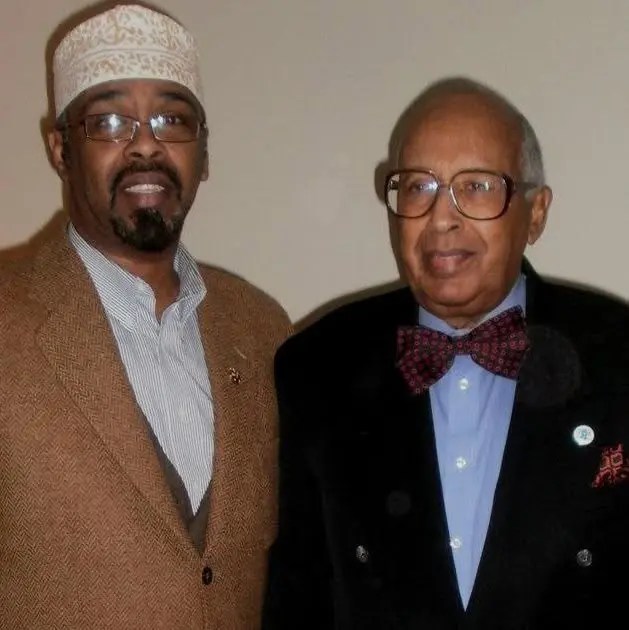

Since living in the US, Barre’s children have cashed in with a Medicare-funded home health care business — which claimed $1.8 million, according to documents seen by The Post — a translation service and even a charity bearing his name.
Ayaanle — who historians and human rights campaigners say served as head of Barre’s administration in the final years of the dictatorship — now lives on a quiet street in a suburb of Columbus, the second largest Somali community in the US after Minnesota, with some 70,000 people. He lives in an unassuming $350,000, three-bedroom house with his wife and young son. A person there said he was out of the country when The Post called this week and attempts to reach him for comment went unanswered. He has never publicly denounced his father’s regime.
The family’s presence has outraged victims of Barre’s regime who were tortured, maimed and saw family members murdered by the dictator’s forces. “It was just awful because, to this day, not a single person had been held accountable for the genocide that took place,” Mohamed added.
“It feels very bad to know Ayaanle is here. Others are scared to speak out but I don’t care. People need to know the truth. He was supposed to be the one who took over from his father, like Saddam Hussein’s son.”
Mohamed said he had sought safety in the US after Barre ordered the massacre of civilians in the Isaaq clan living in the north, now the self-governing Somaliland. The campaign saw entire cities flattened due to aerial bombardment, wells poisoned and more than a million landmines laid on grazing lands.
“The American immigration system is broken. ICE is rounding up and deporting people but the children of a known dictator with serious allegations of murder are living here,” Mohamed said.
It is not clear exactly if Ayaanle works in Columbus. At one time he set up a translation services company called Somali Global Services and he is linked to Halwa Kismayo Coffee, a cafe which sells traditional Somali sweets.

He also appears to have launched a non-profit titled Somali Immigrants Achieving Democracy in 2004 and photos posted online show him travelling around the globe to London, Oman and the UAE.
Faiza Abdullahi, 41, was a child when her family fled the indiscriminate bombing. On their journey to the US, her sick and disabled father died in a refugee camp in Ethiopia. “I remember it being a scary time to live there. Soldiers would go around house to house, ransacking the property and stealing any valuables they could find like cash and gold,” she said.
“Suddenly one night the fighting started and all we could hear was the sound of gunfire. Then the ground started to shake and bombs were dropped everywhere. It was chaos. “There was so much debris coming down and we were screaming and just running as far as we could away.”
Abdullahi, who arrived in Ohio in the 90s, felt “sick” when she came face to face with one of Siyad Barre’s daughters when she was dropping off her child at the local community center. “I am older, wiser and do not know what Siyad Barre’s children did, but I do not think every human being is bad,” she said.
“But I find it very shameful to live in the same state as anyone who can celebrate an evil person who tried to wipe out my lineage. “He’s treated like a hero but he is a war criminal and we have to live through the trauma.”
Barre had seized power in a Soviet-backed coup in 1969, but died of a heart attack in Lagos, Nigeria in 1995. He had lived there in exile after he and his cronies fled Somalia, looting an estimated $27 million in gold and cash from the central bank when they went.
The Barre family’s place among the Somali diaspora is complicated. A large part of the Somali community in Columbus hail from the same part of Somalia as the Barre family and remain loyal. Barre is even celebrated at the Somali Museum of Ohio, which proudly refers to the dictator as its “honorable grandfather.”
His daughter, Deka, lived with her husband, former Somali ambassador Abdikarim Ali Omar, in Ohio and the pair ran Vanguard Home Health Care which received more than $1.8 million in Medicare funding before he died aged 70 in January 2021. The company appears to have been legitimate and filed proper paperwork, and closed after Ali Omar’s death. Deka appears to be a prominent speaker and features at various events within the Somali community in Columbus. She did not respond to requests for comment from The Post.

Historian and Oxford University doctoral researcher Mohamed Haji Ingiriis explained how Ayaanle was his “father’s right-handman” in the bloody regime. “When his father had an accident [and was temporarily unable to rule], Ayaanle became de facto ruler in the Villa Somalia, running day-to-day regime activities solely with an iron-fist,” he told The Post. “He was so powerful that he was able to appoint and dismiss regime authorities on behalf of his father.”
The scholar also claims Barre’s children “massively benefited from the embezzled properties he acquired illegally during his regime”. He added: “Siyad Barre’s children were not regular children. They were part of a system that killed a lot of people.

“Many Somalis who lived in Columbus have moved away from this family to flee from the trauma that happened to their own families. “The US should appoint a fact-finding commission of inquiry to investigate the barbaric and brutal atrocities committed during the military regime and hold accountable those who had done those crimes.”
Human rights activist Suleiman Bolaleh, 59, has dedicated his life to showing the world the horrors experienced by his people during the Barre regime. He was awarded for his work in documenting the atrocities and helping bring victims forward to testify in a US civil case against former Somalia defense minister Mohamed Ali Samantar, who moved to Virginia after the collapse of the government.
Samantar was found liable for human rights atrocities in 2012 and ordered to pay $21 million in damages to victims who suffered years of imprisonment, torture, rape and abduction under his watch.
Bolaleh, who moved to California over fears of being targeted by Barre supporters in Somalia, said: “I was a university student when the civil war started and it was like living through hell. I did not expect to survive.
“There is clear evidence of ethnic cleansing, torture, indiscriminate bombing of civilians, war crimes and crimes against humanity. “[Barre’s] red beret soldiers were going door-to-door in civilian homes, rounding up young men and children as young as 12 and they murdered them in cold blood.
“They used tractors to collect the dead bodies and bury them in mass graves which are still there today.” He said he was “horrified” to find out the dictator’s family are now living in comfort in the US, alongside the regime’s victims. “I am calling for an investigation to be opened against his family to find out exactly what they were doing during the civil war, what they know and to give up any proceeds they may have inherited from this criminal genocidal dictator,” Bolaleh said.
Source: This piece is first published on New York Post


You must be logged in to post a comment.