Tag: Horn of Africa

Somaliland’s Diplomatic Momentum Stumbling Dangerously under the Current Foreign Minister

Somaliland’s Diplomatic Momentum Stumbling Dangerously under the Current Foreign Minister

For nearly two decades, I have watched Somaliland with admiration. As a former senior Africa analyst for the Central Intelligence Agency, I have studied fragile states, insurgencies, and democratic experiments across the continent. Continue reading “Somaliland’s Diplomatic Momentum Stumbling Dangerously under the Current Foreign Minister”

US Risks Losing Key Ally in the Horn of Africa – Somaliland – if Continues Clinging to Outdated Policies

Why the US should recognize Somaliland: A game-changer for security and strategy.

Somaliland’s Berbera port sits at the heart of a global power struggle; As China, Iran and Russia tighten their grip on vital waterways, the US risks losing a key ally in the Horn of Africa by clinging to outdated policies. Continue reading “US Risks Losing Key Ally in the Horn of Africa – Somaliland – if Continues Clinging to Outdated Policies”

Somalia Observes as the UAE Deepens Its Military Ties with Somaliland

Somalia Observes as the U.A.E. Deepens Its Military Ties with Somaliland

As the Gulf state increases its power in the Horn of Africa, the United Arab Emirates -UAE – and Somaliland are strengthening their military and security collaboration. This development may further exacerbate tensions between Abu Dhabi and the federal government of Somalia. Continue reading “Somalia Observes as the UAE Deepens Its Military Ties with Somaliland”

Two Summits in Djibouti, but no Talk of Djibouti’s Own Struggles

Two Summits in Djibouti, but no Talk of Djibouti’s Own Struggles

The Horn of Africa is facing an unprecedented confluence of crises, marked by civil wars in Ethiopia and Sudan, escalating tensions between Somalia and Ethiopia, and the persistent threat of Al-Shabaab’s insurgency in Somalia.

Against this backdrop, two high-profile forums were held recently in Djibouti, aimed at addressing regional stability and security. The Heritage Institute for Policy Studies convened its annual three-day dialogue on regional stability, while the East Africa Security Forum (EASF) brought together diplomats, military leaders, and private-sector stakeholders under the auspices of the Combined Joint Task Force – Horn of Africa (CJTF-HOA).

However, conspicuously absent from both forums were discussions about Djibouti’s own internal issues: widespread hunger, endemic insecurity, and a lack of democratic governance. These omissions raise critical questions about the priorities of regional and international stakeholders and the inherent challenges of hosting such discussions in a country with pressing internal issues.

The Horn of Africa is a region teetering on the edge of collapse. In Ethiopia and Sudan, civil wars have left thousands dead and millions displaced. Somalia continues to battle the Al-Shabaab insurgency, a persistent threat to national and regional stability.

Meanwhile, tensions between Somalia and Ethiopia have flared over a contentious port deal Addis Ababa signed with Somaliland, the breakaway region whose sovereignty remains unrecognized internationally.
Amid this chaos, Djibouti has positioned itself as a relative island of stability, hosting international military bases and serving as a hub for diplomatic activity.

Yet beneath this façade, Djibouti grapples with its own set of crises, including hunger exacerbated by prolonged droughts, economic vulnerabilities, and a political system often criticized for its lack of democratic freedoms.

Between April and June 2024, for instance, an estimated 221,000 people or 19 percent of the analyzed population (out of 1.18 million people), were facing high levels of acute food insecurity, according to the Integrated Food Security (IPC).

In the 2024 Global Hunger Index, Djibouti ranks 92nd out of 127 countries, with a score of 21.2, indicating a serious level of hunger. Djibouti imports 90% of its food, making it vulnerable to international market price fluctuations, according to the European Civil Protection and Humanitarian Aid Operations. The country’s hot, dry climate also limits agricultural production.

Djibouti has a poverty rate of 79%, with 42% of the population living in extreme poverty. High levels of unemployment also contribute to humanitarian needs.

Djibouti’s geographical location makes it a strategic hub for international military bases, hosting troops from the United States, China, France, Japan, and Italy. Djibouti’s maritime territory is increasingly plagued by illegal fishing activities, primarily conducted by foreign fleets from Yemen and China. These unregulated operations deplete fish stocks, threatening the livelihoods of local fishing communities and disrupting the marine ecosystem.

Illegal fishing not only undermines Djibouti’s economic prospects but also poses a security threat. It has been linked to organized criminal networks that use fishing vessels as cover for smuggling goods, weapons, and even people. Additionally, the lack of effective maritime surveillance leaves Djibouti’s waters vulnerable to exploitation, highlighting a significant gap in its security infrastructure.

The government’s inability to monitor and regulate its maritime borders exacerbates the issue. While international partnerships, such as those with the European Union’s naval operations and other anti-piracy missions, aim to strengthen maritime security, the focus often remains on piracy rather than illegal fishing. This imbalance leaves the problem of unregulated fishing largely unaddressed.

While these bases contribute to regional security, they do not shield Djibouti from internal and neighboring conflicts. The Horn of Africa is one of the most volatile regions globally, with civil wars in Ethiopia and Sudan, Al-Shabaab’s insurgency in Somalia, and heightened tensions between neighboring states.

These conflicts spill over into Djibouti, straining its limited resources and exposing vulnerabilities in its security apparatus. For instance, tensions between Ethiopia and Somalia over territorial disputes and Somaliland’s independence aspirations often find expression in Djibouti’s border areas, leading to localized instability. The porous borders make it difficult for authorities to control the influx of refugees and militants, further complicating security management.

Domestically, Djibouti faces political repression and a lack of democratic governance, which exacerbate insecurity. The government, led by President Ismaïl Omar Guelleh since 1999, has faced allegations of being an Al-Shabaab sympathizer. There are also allegations that Somalia’s Salaam Bank, which has been linked with Al-Shabaab over the years, also has links with Guelleh’s inner political circle.

His government continues to face strong criticism for stifling dissent and consolidating power. This political climate fosters discontent among the populace and raises concerns about the state’s ability to manage internal security effectively.

Human trafficking is a persistent and growing problem in Djibouti, largely driven by its proximity to conflict zones and its strategic location as a transit point to Yemen and the Arabian Peninsula. The majority of trafficked individuals come from Somalia and Ethiopia, fleeing poverty, conflict, and political instability. These migrants often seek better opportunities in Gulf countries but become victims of exploitation and abuse along the way.

Djibouti serves as a key transit route for smugglers and traffickers who promise desperate migrants passage to Yemen, often under dire and dangerous conditions. The journey involves crossing the treacherous Gulf of Aden, frequently in overcrowded and unseaworthy vessels. Many do not survive the crossing, falling victim to drowning, starvation, or abuse at the hands of smugglers.

The human trafficking networks operating in Djibouti are highly organized, exploiting the country’s weak border controls and limited law enforcement resources. Despite efforts by international organizations and NGOs to combat trafficking, the scale of the problem remains overwhelming. Trafficked individuals often face inhumane treatment, including forced labor and sexual exploitation, both en route and upon arrival in their destination countries.

Despite these glaring issues, the forums held in Djibouti turned their focus outward, concentrating on the region’s broader security dilemmas. The absence of discussions on Djibouti’s internal challenges is reflective of its strategic position and the delicate balancing act required in such high-stakes gatherings.

From November 25 to 27, scholars, politicians, and traditional leaders gathered for the Heritage Institute’s annual forum, hosted in Djibouti. The focus was on fostering dialogue among key stakeholders from across the Horn of Africa, with an emphasis on addressing regional instability. Central to the discussions were the civil wars in Ethiopia and Sudan, Somalia’s ongoing political challenges, and the threat posed by Al-Shabaab.

The forum offered a unique opportunity for regional leaders to confront pressing transnational issues. However, its agenda sidestepped domestic concerns within Djibouti, opting instead to spotlight regional dynamics. The decision to omit discussions about Djibouti’s hunger crisis, insecurity, or democratic deficits can be attributed to several factors, including the forum’s regional scope and the host nation’s influence over the agenda.

The East Africa Security Forum (EASF) held from November 21 to 23 at Camp Lemonnier, the East Africa Security Forum took a decidedly security-focused approach. Organized by the U.S.-led Combined Joint Task Force – Horn of Africa, the forum emphasized enhancing collaboration between the U.S. and its regional partners. Discussions revolved around managing inter- and intra-state conflicts, leveraging private-sector investments for stability, and tackling tribal and national affiliations that often fuel regional discord.

Once again, Djibouti’s internal issues were notably absent. Instead, the forum concentrated on broader regional and international security priorities, aligning with U.S. strategic interests in the Horn of Africa. As a key U.S. ally and the site of America’s largest military base in Africa, Djibouti enjoys a degree of diplomatic immunity when it comes to scrutiny of its internal affairs.

This narrative of stability is carefully cultivated and fiercely protected in Djibouti. Raising issues such as hunger, insecurity, or democratic deficits in high-profile forums held within Djibouti could be seen as diplomatically provocative, potentially jeopardizing relations with the host nation.

Consequently, organizers often tread cautiously, prioritizing external challenges over internal critiques.

However, this approach is not without consequences. Ignoring Djibouti’s domestic issues risks perpetuating cycles of poverty, eroding governance, and undermining the very stability that makes it a valuable partner in regional security efforts.

Djibouti’s hunger crisis, driven by prolonged droughts and economic stagnation, continues to affect a significant portion of its population. Failing to address these issues in forums ostensibly focused on stability undermines efforts to build a resilient and secure region.

International actors, including the U.S. and multilateral organizations, have a responsibility to advocate for transparency and reform in Djibouti but they often choose no to. The absence of meaningful U.S. advocacy for transparency and reform enables Djibouti’s entrenched authoritarian practices, stifling democratic progress.

President Ismaïl Omar Guelleh has presided over a system marked by political repression, corruption, and limited civic freedoms. Without external pressure for reform, this system remains unchallenged, perpetuating governance practices that prioritize elite interests over public welfare.

By avoiding discussions on governance and democracy, forums inadvertently legitimize Djibouti’s authoritarian tendencies. This silence not only perpetuates existing power structures but also undermines broader efforts to promote democratic principles across the region.

Djibouti’s lack of transparency hampers economic development by discouraging foreign investment and allowing corruption to flourish. With a centralized economy heavily dependent on port revenues and rents from military bases, unchecked governance risks deepening economic inequality and fostering discontent among marginalized communities.

Future forums must adopt a more inclusive and holistic approach to addressing the Horn of Africa’s challenges. This includes incorporating discussions on domestic issues within host nations like Djibouti, even when such topics are diplomatically sensitive.

Message from Somaliland SAG on America’s Evolving Foreign Policy towards Africa

Message from Somaliland SAG on America’s Evolving Foreign Policy towards Africa

Recent changes in Washington have led to a notable transformation in how the United States approaches foreign aid and international relations, with Somaliland emerging as a key partner that aligns closely with America’s fundamental interests. Continue reading “Message from Somaliland SAG on America’s Evolving Foreign Policy towards Africa”

Berbera: A Strategic Gateway for India’s Trade and Security in the Horn of Africa

Berbera: A Strategic Gateway for India’s Trade and Security in the Horn of Africa

The Port of Berbera, situated in Somaliland along the Gulf of Aden, is fast emerging as a vital hub in the Horn of Africa, offering strategic and economic opportunities for countries seeking to secure their trade routes and expand geopolitical influence. With its 500-mile coastline and proximity to key global shipping lanes, Berbera provides a stable and secure alternative to the high-risk zones near Yemen. For India, Berbera represents a strategic opportunity to strengthen its trade ties with Africa, enhance maritime security, and counter destabilizing forces in the region, particularly as the global trade environment grows increasingly volatile. Continue reading “Berbera: A Strategic Gateway for India’s Trade and Security in the Horn of Africa”

Somaliland Promotes Protection of Freedom of Expression

Somaliland Promotes Protection of Freedom of Expression

According to the Somaliland administration, the right to freedom of expression will be strengthened, and journalists and citizens will not face jail time for voicing opinions that the government finds objectionable.

The Minister of Information, Ahmed Yasin Sh. Ali Ayaanle, has emphasized that they will defend freedom of expression in response to President Abdirahman Mohamed Abdillahi Cirro’s recent promise to the media and civil society organizations.

“We are committed to ensuring that no one is imprisoned for their opinions, as long as they do not violate the law, or report unpopular facts, then we will become a nation governed by the law and free,” added the minister.

According to American Freedom House’s annual surveys, Somaliland ranks first in East Africa and frequently outperforms Kenya in terms of civil and political rights protection.

In the past administrations, the widespread incarceration of the media and others who voice opinions that differ from those of the government in power, however, hinders Somaliland’s advancement in political and civil freedoms.

During the election campaign, the current president – Cirro – and his Waddani party promised to improve the defense of these essential rights.

Outlining A Comprehensive Foreign Policy Vision for the New Admin Under President-elect H.E. Abdirahman Mohamed Abdullahi “Cirro”

Outlining A Comprehensive Foreign Policy Vision for the New Admin Under President-elect H.E. Abdirahman Mohamed Abdullahi “Cirro”

“Re-imagining Somaliland Foreign Policy: A Vision for Sovereignty, Security, and Prosperity”

Somaliland stands at a critical juncture in its history. Decades of resilience, meticulous state-building, and a commitment to democratic governance have positioned it as a beacon of stability in the often turbulent Horn of Africa. While the region grapples with conflicts, fragile states, and authoritarian regimes, Somaliland has charted an extraordinary path, characterized by grassroots peace-building, credible elections, and a functioning governance structure. Continue reading “Outlining A Comprehensive Foreign Policy Vision for the New Admin Under President-elect H.E. Abdirahman Mohamed Abdullahi “Cirro””

Presidential Election will Bolster Somaliland’s Determination to Gain Recognition

Presidential Election will Bolster Somaliland’s Determination to Gain Recognition

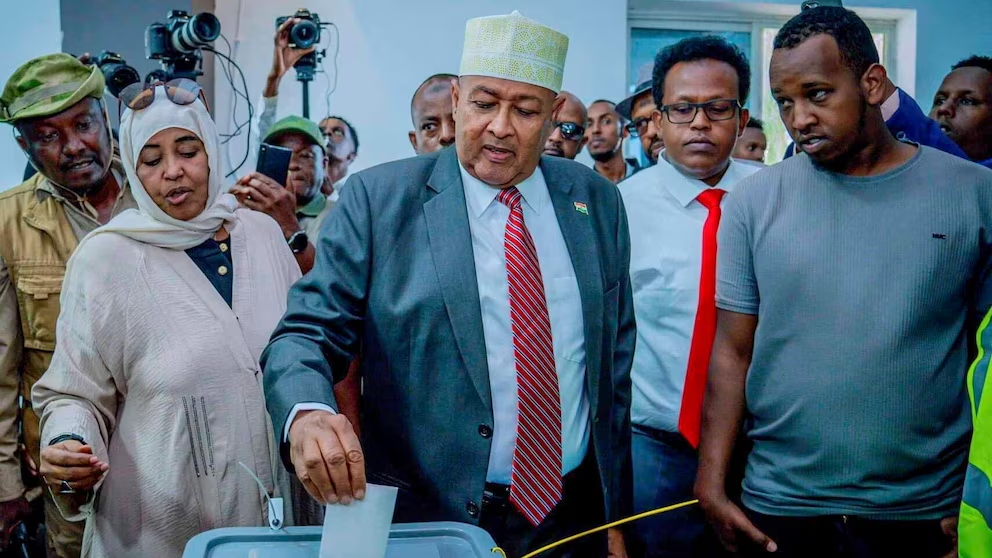
On November 13, the 1.5 million registered voters of Somaliland Republic in the volatile Horn of Africa region went to the polls to elect a new leader.

Continue reading “Presidential Election will Bolster Somaliland’s Determination to Gain Recognition”

Maxwell Webb’S Piece on Atlantic Council Missed Somaliland’s Pivotal Role in the Region

Maxwell Webb’S Piece on Atlantic Council Missed Somaliland’s Pivotal Role in the Region
The article titled “Nine months later: The regional implications of the Ethiopia-Somaliland MOU” authored by Maxwell Webb and published by the Atlantic Council, misses a crucial element by neglecting Somaliland’s pivotal role in the region.
While the author attempts to analyze the involvement of actors like Djibouti, Turkey, Egypt and Al Shabab, Somaliland’s strategic importance is notably underplayed, despite being the primary signatory alongside Ethiopia. The piece also overlooks Somaliland’s position and control of the strategic waterway of the Gulf of Aden and its consistent political stability—factors that should have been central to this analysis.
Somaliland clearly stands in stark contrast to Mogadishu, which, despite international recognition, remains stuck in instability and state failure. Somaliland continues to flourish, with democratic elections—its fourth, scheduled for November, showcasing a commitment to democracy, governance and progress.
The MoU between Ethiopia and Somaliland is not just a diplomatic agreement but a forward-looking partnership aimed at shared prosperity, growth, and regional stability—a point the author fails to emphasize enough.
Moreover, Mogadishu’s tantrums on this MoU is seen by many as a distraction from its numerous domestic failures and impending collapse after years of international community support.
While Mogadishu teeters on failure, Somaliland is taking concrete steps toward long-term development and stability.
The author, despite overwhelming evidence, overlooks Somaliland’s emergence as a stable partner in the Horn of Africa and overemphasizes the role of Somalia, thereby reducing the article’s impact.
In short, Somaliland’s vision for the future aspirations and its centrality to regional growth deserved a much stronger focus. This would have provided a more accurate and comprehensive view of the significance of the MoU for the two nations involved.
In conclusion, this article reminded me of a college professor of mine who would grade assignments with a “W.” When pressed for clarification, he would respond with, “Too many words, not enough substance.”

Roda J Elmi
Deputy Foreign Affairs Minister
Somaliland